




A taxi fare calculator estimates a metered fare from four ingredients: the flag drop (the amount on the meter when the trip starts), a distance rate, a time rate for slow traffic or waiting, and fixed surcharges such as airport fees. Tips, tolls and some peak-hour charges are usually added on top. At many airports a flat zone fare replaces the meter entirely, which makes the calculator unnecessary.
The weakness of any calculator is the time component, because nobody knows the traffic in advance. That is why the official estimates published by airports come as a range, and why a fixed, pre-booked fare appeals to travellers who want the number before they get in. Below, the four ingredients are worked through with official figures from New York, Las Vegas, Vancouver and Calgary, followed by a fair view of when the taxi wins.
How does a taxi fare calculator work?
It adds the starting charge, a per-distance rate, a per-minute rate for slow traffic or stops, and any surcharges such as airport or late-night fees. The result is an estimate, not a price, because the time portion depends on traffic. Tips and tolls usually come on top, and airport flat zone fares replace the meter altogether.
The structure is similar everywhere, but the numbers and the extras change from city to city. A calculator built on one city's tariff will be wrong in the next, so the safest source is always the regulator or the airport for the place you are travelling.
The four ingredients of a metered fare
1. The flag drop. New York's Taxi and Limousine Commission sets an initial charge of US$3.00 on its official taxi fare page. In Las Vegas, the Nevada Taxicab Authority lists the initial activation of the taximeter at US$5.50 on its approximate fare information.
2. The distance rate. New York charges 70 cents per one-fifth of a mile, which works out to US$3.50 a mile. Las Vegas charges 37 cents per eighth of a mile, which the Authority states as US$8.21 for the first mile and US$2.96 for each mile after that.
3. The time rate. This is the part calculators guess at. In New York, the same 70 cents is charged per 60 seconds when the cab is in slow traffic or stopped, instead of per fifth of a mile above 12 mph. Las Vegas charges waiting time at US$32.40 an hour. A trip that crawls through a jam costs more than the same trip at night, even though the distance is identical.
4. Surcharges and extras. New York adds a 50-cent MTA state surcharge, a US$1.00 improvement surcharge, a US$1.00 overnight surcharge from 8 p.m. to 6 a.m., a US$2.50 weekday rush-hour surcharge from 4 p.m. to 8 p.m., and a US$2.50 congestion surcharge for yellow taxis on trips that begin, end or pass through Manhattan south of 96th Street. Las Vegas adds a US$2.40 airport fee per pickup, a US$3.00 credit or debit card fee and a 3% excise tax on all rates and fees, plus a fuel surcharge by tier.
Worked example: LaGuardia to Times Square
LaGuardia is the clearest case of a metered airport trip. The Port Authority's LaGuardia taxi page estimates US$30 to US$52 to Times Square and the Theater District, and notes that its estimates do not include tips, tolls or MTA congestion pricing. It also lists a US$2.00 airport access fee on pickups and reminds riders that the meter must read US$3.00 at the start.
You can see where that range comes from. The routed drive from LaGuardia to Midtown is about 9 miles (14 km). At US$3.50 a mile, distance alone adds about US$31.50 to the US$3.00 start, before any slow-traffic minutes or surcharges. A fast late-evening run lands near the bottom of the range; a weekday 5 p.m. arrival in heavy traffic lands near the top, and the tip comes after.
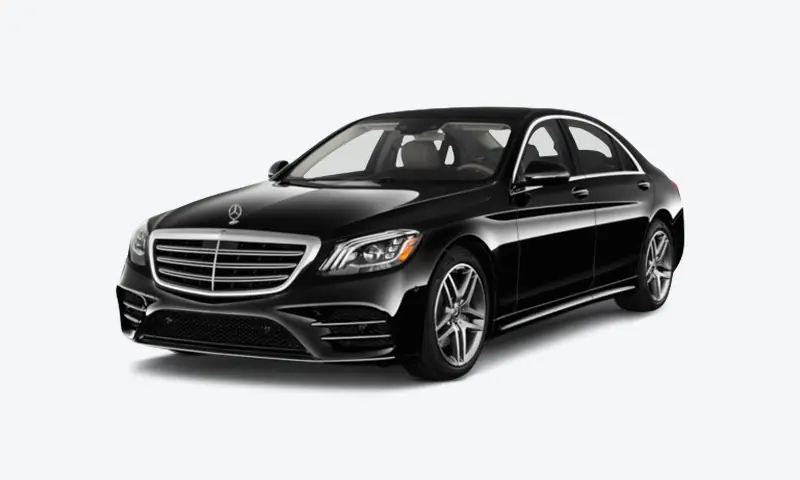
For comparison, an Elly8.net business sedan from LaGuardia to Midtown is a fixed US$145, all-in, with meet and greet inside the terminal and the standard gratuity included. For one traveller with a carry-on at a quiet hour, the taxi is clearly cheaper. The fixed fare earns its price for a family with bags, a late arrival, or a passenger who needs to know the cost in advance. The New York car service page lists every airport.
Worked example: Newark's zone fares and the bag charge
Newark Liberty sits in New Jersey, so taxis from its stands follow the Port Authority's own fare schedule rather than the New York meter. The airport's taxi service page lists zone fares into Manhattan of US$60 from the Battery to West 13th Street, US$65 from West 14th to West 50th, US$70 from West 51st to West 96th, US$75 from West 97th to West 185th and US$80 above that. On top come a US$2.00 airport access fee, US$1 for each bag including carry-ons, a US$10 surcharge on trips into New York at rush hours, a US$5.00 charge for the East Side of Manhattan between Battery Park and 145th Street, and tolls and congestion pricing.
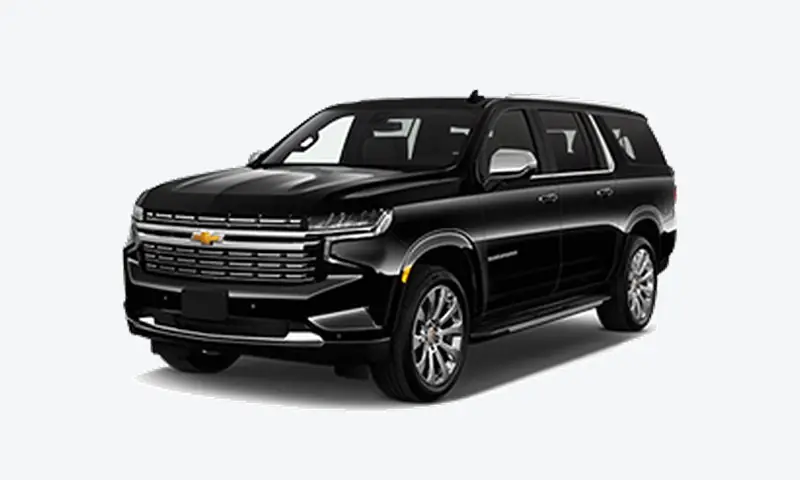
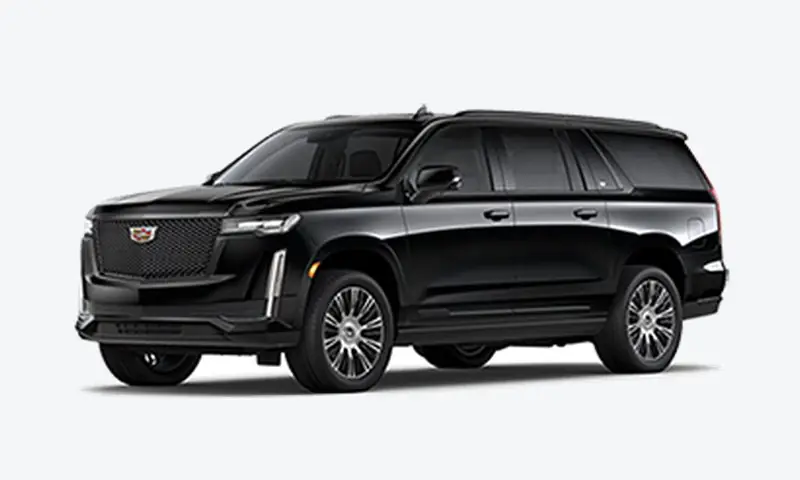
Run the numbers for a family of four with four suitcases and four carry-ons going to an East Side hotel in the 40s at 6 p.m. on a weekday, using the US$65 zone for 14th to 50th Streets: US$65 plus US$2, US$8 in bag charges, US$10 rush hour and US$5 for the East Side, which is US$90 before tolls, congestion pricing and tip, and four people with eight bags may not fit one cab. An Elly8.net Business SUV from Newark to Midtown is a fixed US$280 for up to six passengers and six bags; the business sedan is US$215. For two people with two carry-ons, the taxi is the obvious saving.
Worked example: flat zone fares in Las Vegas and Vancouver
Some airports skip the meter for the most common trip. In Las Vegas, the Taxicab Authority publishes approximate airport-to-Strip zone fares of US$22.25 to Zone 1 (Sunset north to Tropicana), US$26.25 to Zone 2 (Tropicana north to Flamingo) and US$30.25 to Zone 3 (Flamingo north to the Stratosphere), with the 3% excise tax and card fee added. An Elly8.net business sedan from Harry Reid International to the Strip is US$125, and the 12-seat Executive Sprinter is US$325 for the whole vehicle; see the Las Vegas price panel.
Vancouver goes further. The airport's taxi page explains that zone fares apply from YVR, that a C$4.00 passenger load charge is already included in every flat zone fare, and that no other surcharges apply except tolls, a clean-up fee and a requested stop en route. The zone map puts downtown Vancouver at C$46. The same page notes two calculator traps: if two or more passengers go to different addresses, the zone fare applies only to the first destination and the meter runs for the rest, and rates do not include gratuities.
At C$46, a taxi from YVR is good value for one to three travellers heading downtown. The Elly8.net business sedan is US$110, which makes sense mainly for families, late arrivals and anyone who wants a chauffeur waiting inside; the Vancouver car service page has the full comparison.
Worked example: metered fares and flat sedans in Calgary
Calgary shows both systems at one airport. The airport's taxis and sedans page says taxi fares are metered and that, under normal driving conditions, the approximate fare to downtown is between C$40 and C$45. The same page lists on-demand airport sedans with a flat zone fare of C$68.75 to downtown, and notes that airport taxis can take four or five adults, with vans available for extra luggage.
That is a useful reminder that a calculator only answers half the question. For a couple with two bags, C$40 to C$45 by taxi is hard to beat. For six people with skis, the choice is between two taxis or a van at the rank and a pre-booked vehicle sized for the group. An Elly8.net Business SUV from YYC to downtown is US$140 for up to six passengers and six bags, and the business sedan is US$105. The Calgary car service page sets out the details.
Side by side: official taxi figures and fixed fares
| Airport trip | Official taxi figure | Basis | Elly8.net business sedan |
|---|---|---|---|
| LGA to Times Square | US$30 to US$52, before tips, tolls and congestion pricing | Meter estimate | US$145 to Midtown |
| LAS to the Strip | US$22.25 to US$30.25 by zone, plus tax and fees | Flat zone | US$125 |
| YVR to downtown Vancouver | C$46 including passenger load charge | Flat zone | US$110 |
| YYC to downtown Calgary | about C$40 to C$45 | Meter estimate | US$105 |
Taxi figures are in local currency and come from the regulator or airport linked above; Elly8.net fares are in US dollars, per vehicle, fixed and all-in. Convert at the day's rate before comparing the Canadian rows.
Build your own estimate in five steps
If you want a realistic number before you travel, work through the same five steps the calculators use. Find the regulator's or the airport's published tariff for the city. Take the routed distance, not the straight-line distance, and multiply by the distance rate. Add a cushion for slow traffic at the hour you will travel, generous at rush hour and small late at night. Add every surcharge that applies to that day and time. Then add tolls and the tip, and compare the total with any flat or fixed fare for the same trip.
Why calculators get it wrong
Calculators are good at distance and poor at everything else. The common reasons a real fare differs from the estimate are:
- Traffic. The slow-traffic rate is the biggest unknown, especially at airport rush hours.
- Time-of-day surcharges. Rush-hour and overnight charges switch on at set hours.
- Tolls. Bridges and tunnels are added at the end and are often left out of estimates.
- Multiple drop-offs. As Vancouver's rule shows, the second address can change the basis of the fare.
- Payment and tax. Card fees and excise taxes, as in Las Vegas, are easy to forget.
- The tip. Most taxi estimates exclude it; our tipping guide explains when it is included and when it is not.
The flat-rate alternative, and the app-quoted fare
There are three ways to get a fixed number instead of an estimate. The first is the official airport flat or zone fare, where one exists. The second is an upfront price from an app: New York's TLC now allows licensed e-hail providers to offer binding fare quotes in yellow and green taxis, and in Toronto the City notes on its passenger safety page that taxis hailed on the street or picked up at a stand must run the meter at the City-regulated rate, while app rides and brokerage bookings may charge a different rate that you must accept before the trip starts.
The third is a pre-booked fixed fare. With Elly8.net the price is set when you book, does not move with traffic or demand, and includes the chauffeur, taxes, standard gratuity and meet and greet; tolls, parking and waiting beyond the included time are billed at cost. Our Uber vs cab comparison covers how app pricing behaves on busy nights.
When the taxi wins, and when a pre-booked car wins
Be honest about the trip. A taxi or the airport flat fare is usually the better call for one or two travellers with light bags, at a quiet hour, going somewhere central. Public transport is better still for a solo traveller with a carry-on; our comparison of airport shuttle buses and private cars gives the transit numbers.
A pre-booked chauffeur wins in a different set of cases: a late or delayed arrival, where the flight is tracked and you get complimentary waiting after a tracked landing; a group that would need two taxis; children who need seats, which are available on request; a meeting that cannot slip; and a company that wants one monthly invoice through a corporate account. The chauffeur vs taxi page goes through each case.
Booking takes three steps: enter the pickup and drop-off with the flight number, choose the vehicle, then press Reserve now or use the web booker, and the confirmation arrives by email. Cancellation is free more than 72 hours before pickup, 10% at 72 hours or less, 50% at 48 hours or less and 100% at 24 hours or less or for a no-show.
Frequently asked questions
How accurate is a taxi fare calculator?
Reasonably accurate on distance and poor on time. The slow-traffic rate, rush-hour surcharges, tolls and tips can each move the final fare. That is why airport authorities publish ranges, such as US$30 to US$52 from LaGuardia to Times Square, rather than a single number.
What is the flag drop on a taxi meter?
It is the amount on the meter when the trip begins. New York's TLC sets it at US$3.00, and the Nevada Taxicab Authority lists US$5.50 for the initial activation of the taximeter in Las Vegas. Distance and time charges are added from there.
Do airport taxis charge a flat rate?
Some do. Vancouver uses flat zone fares from YVR, with downtown at C$46 including the passenger load charge, and Las Vegas publishes airport-to-Strip zone fares. LaGuardia and Calgary taxis are metered. Check the airport's own taxi page for the trip you are making.
Is a pre-booked car more expensive than a taxi?
For one or two people at a quiet hour, usually yes. A taxi from YVR to downtown is C$46, while an Elly8.net sedan is US$110. The pre-booked fare is fixed, includes gratuity and meet and greet, and covers up to six people and six bags in a Business SUV.
Are tips included in taxi fare estimates?
Usually not. The LaGuardia estimates exclude tips, tolls and congestion pricing, and Vancouver's airport states that its taxi rates do not include gratuities. Elly8.net fares are different: the standard gratuity is already included in the fixed price, so the total shown at booking is the amount you pay.
Do taxis charge extra for luggage?
It depends on the airport. Newark's Port Authority schedule adds US$1 for each bag, including carry-ons, on top of the Manhattan zone fare and the US$2.00 access fee. Many other airports publish no bag charge, but vehicle size still limits how much fits. Elly8.net prices never change with the number of bags.